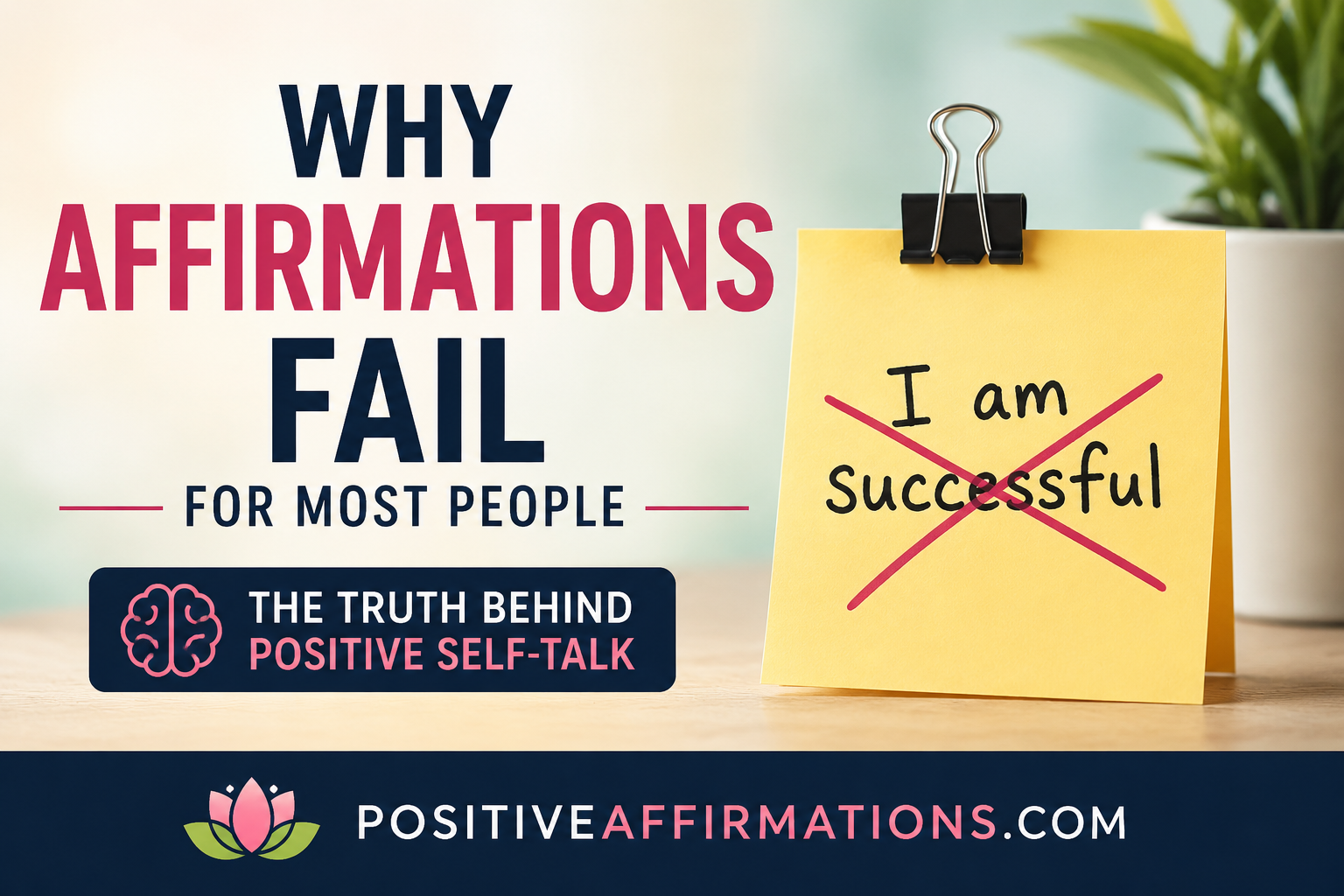
Affirmations have become incredibly popular. Scroll through social media, self-help books, or wellness websites and you’ll see endless phrases like:
“I am successful.”
“I attract abundance.”
“Everything always works out for me.”
Yet many people quietly try affirmations for days, weeks, or even months and end up frustrated. They feel silly saying the words. Nothing changes. Motivation fades. Eventually they conclude affirmations “don’t work.”
The truth is more nuanced.
Affirmations can be powerful tools for reshaping thought patterns, improving confidence, and reinforcing healthier beliefs. But most people unknowingly use them in ways that make them ineffective — or even emotionally uncomfortable.
Here’s why affirmations often fail, and how to make them work more effectively.
1. The Affirmation Feels Too Unrealistic
One of the biggest mistakes people make is repeating statements their mind simply does not believe.
If someone struggling financially says:
“I am a millionaire.”
their brain may immediately respond:
“No you’re not.”
Instead of creating empowerment, the affirmation creates internal resistance.
Research in psychology suggests that when affirmations are too far from a person’s current belief system, they can trigger discomfort rather than confidence. The mind tends to reject statements that feel obviously false.
A Better Approach
Use affirmations that feel believable and attainable.
Instead of:
“I am completely fearless.”
Try:
“I am learning to handle challenges with more confidence every day.”
This creates progress instead of conflict.
2. People Repeat Words Without Taking Action
Affirmations are not magic spells.
Saying positive words while avoiding action rarely creates meaningful change. Someone can repeat:
“I am healthy.”
all day long, but if they ignore sleep, nutrition, stress, and movement, the affirmation alone won’t transform their life.
Affirmations work best when they reinforce behavior — not replace it.
Think of Affirmations as Mental Training
Athletes use positive self-talk to improve focus and resilience. But they still train. They still practice. The mindset supports the action.
Affirmations are most effective when paired with:
- Consistent habits
- Clear goals
- Emotional awareness
- Real-world effort
- Repetition over time
3. Negative Self-Talk Is Stronger Than Occasional Positivity
Many people spend years reinforcing negative beliefs:
- “I’m not good enough.”
- “Nothing ever works out.”
- “I always fail.”
- “Nobody cares about me.”
Then they try affirmations for five minutes a day and expect immediate transformation.
The brain tends to follow familiar mental pathways. Negative thought patterns repeated for years become deeply conditioned.
Affirmations often fail because people underestimate how much repetition it takes to reshape internal dialogue.
Consistency Matters More Than Intensity
A gentle affirmation repeated daily for months is often more effective than dramatic emotional declarations done inconsistently.
Small shifts create lasting change.
4. People Use Affirmations to Suppress Real Emotions
Toxic positivity can become a problem.
Some people use affirmations to avoid sadness, grief, fear, anger, or anxiety instead of processing those emotions honestly.
For example:
- Feeling devastated but repeating “I’m perfectly happy.”
- Feeling anxious while forcing “I am calm” without addressing the cause
- Ignoring burnout while repeating “Everything is amazing”
This disconnect can create emotional numbness rather than healing.
Healthy affirmations acknowledge reality while encouraging growth.
Healthier Examples
Instead of:
“Nothing bothers me.”
Try:
“I can move through difficult emotions with strength and self-compassion.”
That feels human and emotionally grounded.
5. People Expect Instant Results
Modern culture loves quick fixes.
Many people approach affirmations expecting dramatic life changes within days. When that doesn’t happen, they quit.
But affirmations work more like exercise than magic.
You don’t go to the gym twice and expect a complete transformation. Mental conditioning also requires repetition and patience.
Over time, affirmations may help:
- Improve self-confidence
- Reduce negative self-talk
- Strengthen motivation
- Reinforce emotional resilience
- Increase optimism
- Shift attention toward opportunities and solutions
The changes are often gradual rather than dramatic.
6. The Affirmations Are Generic and Emotionally Empty
A lot of affirmations online sound polished but emotionally disconnected.
Statements like:
“I radiate infinite cosmic abundance.”
may sound inspiring, but they often lack personal meaning.
The most effective affirmations feel emotionally relevant and authentic to the individual using them.
Effective Affirmations Are Personal
Good affirmations often connect to:
- Specific struggles
- Personal goals
- Emotional healing
- Self-worth
- Recovery
- Motivation
- Relationships
- Anxiety or stress management
The more meaningful the affirmation feels, the more likely it is to resonate.
7. People Say Affirmations Passively Instead of Engaging Emotionally
Repeating affirmations mechanically while distracted usually has limited impact.
Emotion matters.
The brain responds more strongly when words are connected to feeling, visualization, attention, and repetition.
Instead of rushing through affirmations, try:
- Slowing down
- Breathing deeply
- Visualizing the desired outcome
- Speaking with intention
- Writing affirmations by hand
- Repeating them during emotionally receptive moments
This creates stronger mental reinforcement.
So… Do Affirmations Actually Work?
Yes — but not in the way many people expect.
Affirmations are not magical shortcuts to wealth, happiness, or success. They are tools that can help shape mindset, attention, confidence, and emotional patterns over time.
Used realistically and consistently, affirmations may help people:
- Interrupt negative thinking
- Build healthier self-perception
- Strengthen resilience
- Stay focused on goals
- Support emotional healing
- Develop more hopeful thinking patterns
But they work best when combined with honest self-awareness and meaningful action.
How to Make Affirmations More Effective
Here are a few practical ways to improve your results:
Keep Them Believable
Choose affirmations your mind can gradually accept.
Make Them Specific
Personal affirmations feel more powerful than generic quotes.
Pair Them With Action
Use affirmations to support behavior change — not avoid it.
Repeat Them Consistently
Daily repetition matters more than occasional intensity.
Allow Real Emotions
Affirmations should support healing, not suppress reality.
Use Present and Progressive Language
Phrases like:
- “I am learning…”
- “I am becoming…”
- “I am growing stronger…”
often feel more natural and sustainable.
Final Thoughts
Affirmations fail for many people because they are often misunderstood. They are not instant cures, magical thinking, or substitutes for action and emotional honesty.
But when used thoughtfully, affirmations can become powerful reminders of growth, resilience, and possibility.
The goal isn’t to force yourself to believe impossible things overnight.
The goal is to slowly train your mind to stop working against you — and start working with you instead.

Michael Z. is the founder of PositiveAffirmations.com and a strong believer in the power of mindset to shape everyday life. His interest in affirmations grew from personal experience with growth, resilience, and learning how to redirect negative inner dialogue into steady self-belief.
Through this platform, he shares structured, practical affirmation collections designed to support confidence, emotional balance, and personal progress. His goal is simple: to create a space where words are used intentionally to strengthen, not weaken, the mind.